SUNDI TOOLS
- Copyright © Wuxi Sundi Precision Tools Co.,LTD All rights reserved.
- Site Map
In 2026, global buyers are evaluating more than price when selecting a Cast Steel Gate Valve. They need dependable isolation, documented materials, and stable performance under pressure. Market forecasts support this cautious approach. Grand View Research and Fortune Business Insights both identify industrial valves as a growing global market, although their estimates differ because of regional coverage and research methods. That difference deserves attention.
Demand remains connected to oil and gas, power generation, water treatment, and expanding industrial infrastructure. A valve may look simple on a supplier’s website. Its service conditions are not. Buyers should examine pressure class, temperature range, trim selection, casting quality, and end-connection standards. API 600, ASME B16.34, and ISO 5208 provide useful reference points for design and testing. For sour-service applications, ISO 15156 may also influence material decisions.
The best choice depends on the pipeline, not the catalog photograph. A 24-inch valve for a high-temperature process line requires different evidence from a smaller water-service valve. Look for heat-number traceability, material test reports, dimensional records, and hydrostatic test results. Supplier audits and witnessed inspections can reveal problems before shipment. They can also add cost and time.
No ranking fits every buyer. Carbon steel, low-temperature carbon steel, and alloy steel each serve different conditions. Resilient-seated designs may suit some systems, while metal-seated valves offer advantages in severe services. However, assumptions can fail in the field. This guide compares major Cast Steel Gate Valve types, standards, applications, and supplier evaluation criteria for more informed global purchasing decisions in 2026.
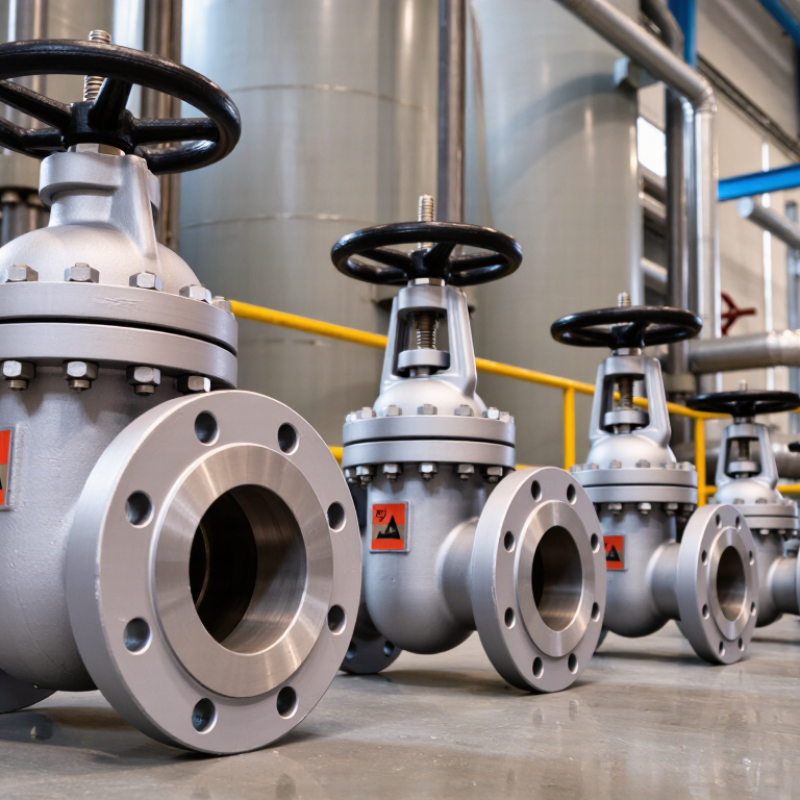
Cast steel gate valves are isolation devices made from cast carbon steel or alloy steel. They control flow by moving a gate between two stationary seats. A handwheel turns the stem, and the stem lifts or lowers the gate inside the valve body. When fully open, the gate leaves the flow path almost clear. This creates low pressure loss in pipelines carrying water, oil, gas, or steam.
The design is simple. Its reliability depends on accurate casting, smooth sealing surfaces, and correct installation. Rising-stem valves show gate movement above the bonnet, making position easier to verify. Non-rising-stem valves save space, but their internal threads need careful protection. Wedge gates seal against angled seats, while parallel gates suit selected services and operating conditions. Bolted bonnets support familiar maintenance routines. Pressure-sealed bonnets can perform well in higher-pressure systems.
Not a throttling valve.
Field experience shows that many failures begin with misuse. Operators partly close the gate to regulate flow, then erosion damages the seats. A fully open or fully closed position is normally safer. Dirt on the seat can also prevent tight shutoff, even when the handwheel feels firm. I would not select a valve from pressure rating alone. Temperature, fluid chemistry, pipe alignment, actuator torque, and inspection access matter too. A small design shortcut may become a costly leak during startup.
Cast steel gate valves use a vertically moving gate to start or stop fluid flow. When fully open, the gate retracts from the flow path, producing low pressure loss. These valves are designed primarily for isolation service rather than flow throttling. Common designs include rising-stem wedge gate valves, non-rising-stem valves, and parallel-slide gate valves.
The chart shows approximate pressure ratings for carbon-steel pressure classes at 38°C (100°F), based on ASME B16.34 pressure-class designations. Actual allowable pressure depends on material grade, temperature, valve size, trim, and the applicable standard.
For global buyers, the main cast steel gate valve types are wedge, parallel-slide, and expanding gate designs. Wedge valves use a gate that presses into two seats, creating reliable shutoff in pipelines carrying water, steam, oil, or gas. Flexible-wedge valves tolerate limited thermal movement better than solid-wedge models. Split-wedge designs can reduce binding, but their internal parts require careful inspection.
Parallel-slide gate valves use two parallel discs and springs or a mechanical spreader. They suit high-temperature steam and power-service lines where thermal cycling is frequent. Expanding gate valves provide strong double isolation, which helps reduce pressure leakage during maintenance. Slab-gate versions are common in transmission pipelines because their straight-through passage limits turbulence and cleaning-tool interference. Small detail, big consequence.
The global industrial valves market was valued at roughly USD 78 billion in 2023, according to Grand View Research’s Industrial Valves Market report. Its broader forecast indicates continued growth through 2030, supported by water, energy, and process infrastructure investment. MarketsandMarkets also identifies oil and gas, power, and water treatment as major demand sectors. These figures cover many valve categories, not cast steel gate valves alone. Buyers should therefore avoid treating market growth as proof of one “best” type. Check pressure class, temperature, seat material, end connection, and applicable requirements such as API 600 and ASME B16.34. Field experience still matters. A cheaper valve with poor coating or inaccessible packing may cost more after installation.
Choosing the best cast steel gate valve starts with the medium, temperature, and operating pressure. Carbon steel castings suit many oil, gas, steam, and water services. Low-temperature grades are safer in cold environments. Stainless steel offers stronger resistance to corrosive fluids, but it usually costs more.
Material certificates matter. Ask for heat numbers, chemical analysis, and mechanical test results. Do not rely on surface appearance alone. A polished valve can still hide casting defects. That detail matters. In my experience, poor material matching causes more trouble than a slightly higher purchase price.
Pressure class selection requires careful calculation. Class 150 may fit moderate systems, while Class 300, 600, or higher handles greater pressure and temperature demands. The rating must match the pipeline flange, gasket, and bolt design. A stronger valve cannot correct a weak connection. Design features also affect long-term service. Bolted bonnets support easier maintenance, while rising stems provide visible position control. Flexible wedges help manage thermal expansion and minor seat misalignment. Hard-faced seats can reduce wear in frequent cycling applications.
Buyers should review hydrostatic and seat leakage test records before shipment. Factory inspection is useful, but field conditions can expose assumptions. Oversizing is not always safer; it may increase cost and operating effort. No selection is perfect. Verify dimensions, end connections, coating, and spare parts before approval.
Choosing the best cast steel gate valve in 2026 starts with the application, not the catalogue. Agriculture still accounts for about 70% of global freshwater withdrawals, according to the UN World Water Development Report 2024. Water lines often need resilient wedge designs, corrosion-resistant trim, and reliable sealing after long idle periods. For oil, gas, and steam service, a flexible wedge or parallel-slide valve may handle higher temperatures and pressure changes more effectively. Solid wedges remain practical for clean, stable fluids. They are simple and durable.
Check the details carefully. Specify design pressure, operating temperature, fluid chemistry, flow direction, and expected cycling frequency. API 600 and ASME B16.34 provide useful design benchmarks for cast steel valves, while API 598 covers pressure testing. Rising-stem, outside-screw-and-yoke construction helps operators confirm valve position visually. Space can be limited, though. A non-rising stem may suit compact installations, but maintenance access becomes less convenient. The valve should also match the pipeline flange standard and pressure class.
Power projects deserve extra attention. The International Energy Agency reported that global energy investment was expected to exceed 3 trillion dollars in 2024, with clean-energy investment roughly twice fossil-fuel investment. That shift creates demanding service conditions across water treatment, hydrogen-related systems, and thermal equipment. A valve may pass factory tests and still fail during poor installation. I have seen alignment errors damage seats quickly. Selection is only half the job; flushing, bolt control, and commissioning matter too. Maybe the most expensive valve is simply the wrong one.
2026 Best Cast Steel Gate Valve Types for Global Buyers
For global buyers, cast steel gate valves must match service conditions, standards, and maintenance capacity. Flexible-wedge designs suit general pipelines and tolerate small alignment changes. Solid-wedge valves handle simpler, stable services. Parallel-slide valves can support high-temperature applications when thermal movement matters. Rising-stem construction also gives operators a clear visual position.
Selection should begin with pressure class, temperature, medium, and end connection. API 600 and ASME B16.34 commonly guide valve design. ASME B16.5 or B16.47 may control flanged dimensions. Confirm every requirement against the project specification. A familiar standard does not guarantee full interchangeability.
Keep records complete. Factory inspections should include shell tests, seat tests, material verification, and dimensional checks. API 598 and ISO 5208 provide useful testing frameworks. Test pressure, duration, leakage results, and calibration details should remain traceable. A certificate without readable data is weak evidence. That happens more often than expected.
Installation quality affects service life. Keep the valve clean, support heavy pipework, and install the stem upright when practical. Avoid using gate valves for regular throttling. Open and close them fully, without forcing the handwheel. During maintenance, inspect packing, body bolts, gasket surfaces, corrosion, and stem condition. Operate stored valves periodically. Field conditions can expose assumptions in a perfect procurement file, so the first inspection should challenge the original selection.
| Valve Type or Design | Typical Construction and Operation | Common Applications | Standards to Verify | Testing and Inspection Factors | Installation Considerations | Maintenance Factors |
|---|---|---|---|---|---|---|
| Solid-wedge gate valve | A single-piece wedge moves between the seats. Available with rising-stem or non-rising-stem arrangements. | General isolation in water, oil, gas, and utility piping where flow is normally fully open or fully closed. | API 600 for applicable bolted-bonnet steel gate valves; ASME B16.34 for pressure-temperature ratings and valve construction; ASME B16.5 or B16.25 for applicable end connections. | Confirm pressure-shell and closure testing requirements against the purchase specification and the applicable edition of API 598 or ISO 5208. Check material records, dimensions, and marking. | Install with the flow direction and orientation allowed by the manufacturer. Provide sufficient clearance for handwheel travel and stem movement; avoid using the valve to regulate flow. | Inspect packing and external joints for leakage. Operate periodically where service conditions allow; investigate rising operating torque before forcing the handwheel. |
| Flexible-wedge gate valve | A one-piece wedge with a circumferential groove or other flexible feature can accommodate limited seat or body deflection. | Process and utility services where thermal changes or piping loads may cause small alignment variations. | Verify the applicable design standard, pressure class, materials, and end dimensions in the project specification; API 600 and ASME B16.34 are commonly referenced for relevant steel valves. | Check shell and seat leakage acceptance criteria, test medium, duration, and any supplementary examination specified by the purchaser. | Support and align adjoining pipework so the valve body is not subjected to excessive loads. Follow the manufacturer’s instructions for stem position and actuator access. | Monitor for leakage, abnormal torque, and packing wear. Maintenance intervals depend on service conditions and operating frequency. |
| Parallel-slide gate valve | Uses parallel seating surfaces and sliding gate elements; specific designs may use springs or pressure-assisted seating features. | Selected steam, power, and process services when the valve design is specifically qualified for the operating conditions. | Confirm that the selected design is covered by the specified valve standard and is suitable for the service. Verify pressure-temperature limits and material compatibility. | Specify closure test method and acceptance criteria appropriate to the design. Review manufacturer test records and required inspection documentation. | Observe any required flow direction, installation position, and warm-up or operating procedure stated by the manufacturer or system designer. | Check for stem packing leakage and smooth travel. Do not assume that maintenance procedures for wedge-gate designs apply to parallel-slide designs. |
| Pressure-seal bonnet gate valve | Uses internal pressure to energize a bonnet sealing arrangement; commonly selected in particular high-pressure and high-temperature designs. | Some power-generation and process applications where pressure, temperature, and operating conditions match the valve’s qualified design. | Verify design-standard scope, pressure-temperature rating, materials, and applicable piping code. Pressure-seal construction is a bonnet design feature, not a substitute for checking the complete valve specification. | Review pressure-boundary test records and the specified closure test. Confirm that inspection and test requirements match the project code and service. | Follow the manufacturer’s installation and tightening procedures. Allow access for inspection and any design-specific bonnet maintenance. | Inspect external sealing areas and stem packing. Any pressure-seal maintenance should be performed using the manufacturer’s procedure and appropriate safety controls. |
| Rising-stem (OS&Y) arrangement | The stem rises or lowers as the valve is operated; the stem position provides a visible indication of travel. OS&Y describes the outside-screw-and-yoke arrangement. | Locations where visible valve position and accessible stem maintenance are useful, subject to space and environmental conditions. | Check the applicable valve design standard, actuator or handwheel requirements, and stem and yoke details in the approved datasheet. | Inspect stem movement, packing, travel limits, and closure performance as part of the specified inspection and test plan. | Provide overhead clearance for the rising stem and handwheel. Protect exposed stem threads from impact, dirt, and corrosion. | Keep exposed threads clean and appropriately lubricated where instructed. Inspect packing and verify full travel without forcing the valve. |
| Non-rising-stem (NRS) arrangement | The stem rotates without moving axially outside the valve; the gate moves internally. Stem rotation alone may not show the exact gate position. | Installations with limited vertical clearance, including some buried or compact piping arrangements when the valve is designed for that service. | Verify suitability for the installation, stem sealing arrangement, pressure rating, materials, and any applicable product standard. | Check operation and closure performance using the specified test procedure. For buried service, confirm any required coating and inspection requirements. | Ensure operating-nut or actuator access and use the specified operating key or extension. Follow the manufacturer’s orientation and burial instructions. | Inspect operating components and stem seals where accessible. Buried valves may require planned access provisions for operation and inspection. |
| Cast-steel body material selection | Common cast carbon-steel grades include ASTM A216 WCB and WCC; alloy or stainless cast grades may be specified for other service requirements. | Selection depends on design temperature, pressure, corrosion allowance, fluid compatibility, and applicable piping code. | Confirm the exact material specification and grade, heat treatment, pressure-temperature rating, and any supplementary requirements on the approved datasheet. | Review material test reports, heat and grade traceability, and specified nondestructive examination. Additional examination depends on the code, design, and purchase order. | Match valve materials and end connections to the piping system. Consider galvanic compatibility, insulation, and external corrosion protection where relevant. | Monitor corrosion, coating condition, and leakage. Select inspection methods and intervals based on the service risk and applicable integrity program. |
Buyer note: Standards and requirements vary by valve design, pressure class, service, jurisdiction, and project specification. Confirm the current applicable editions, acceptance criteria, material requirements, and end-connection details with the project engineer and valve manufacturer before purchase or installation.