Why Choose an ABA Blown Film Machine for Your Production Needs?
When it comes to film production, efficiency and quality are key. The aba blown film machine stands out as an ideal choice. This technology allows for high-quality films while ensuring cost-effectiveness.
These machines are designed for versatility. They can handle various materials, making them suitable for multiple applications. Many manufacturers have noticed a boost in productivity after incorporating an aba blown film machine. Yet, it’s crucial to evaluate your specific needs. What works for one operation may not fit another.
Investing in an aba blown film machine requires careful consideration. You need to examine your production requirements closely. Not all machines deliver the same performance. Balancing quality and output is essential in this decision-making process. It's important to reflect on these factors before making a commitment.
Understanding ABA Blown Film Technology
ABA blown film technology stands out in the manufacturing industry. This method combines three layers of film, enhancing strength and barrier properties. Industry reports indicate that such films can achieve a 20% reduction in material usage, resulting in lower production costs and less waste. Companies are increasingly focusing on sustainability. Using ABA technology contributes to eco-friendly practices without sacrificing quality.
Moreover, the flexibility of ABA film is impressive. It allows for variations in thickness and surface properties, catering to diverse applications. Research shows that 75% of manufacturers prefer multilayer films for their versatility. Yet, one challenge remains: achieving consistent layer thickness can be tricky. Operators need precise control in their processes to avoid defects. Investing in training and maintenance can significantly improve performance.
Production efficiency is another compelling factor. ABA blown film machines can operate at high speeds, enabling companies to meet growing demand efficiently. However, with speed comes the risk of errors. Constant monitoring is crucial to maintain quality standards. The balance between speed and quality should be a focal point for manufacturers using this technology.
Key Advantages of Using ABA Blown Film Machines
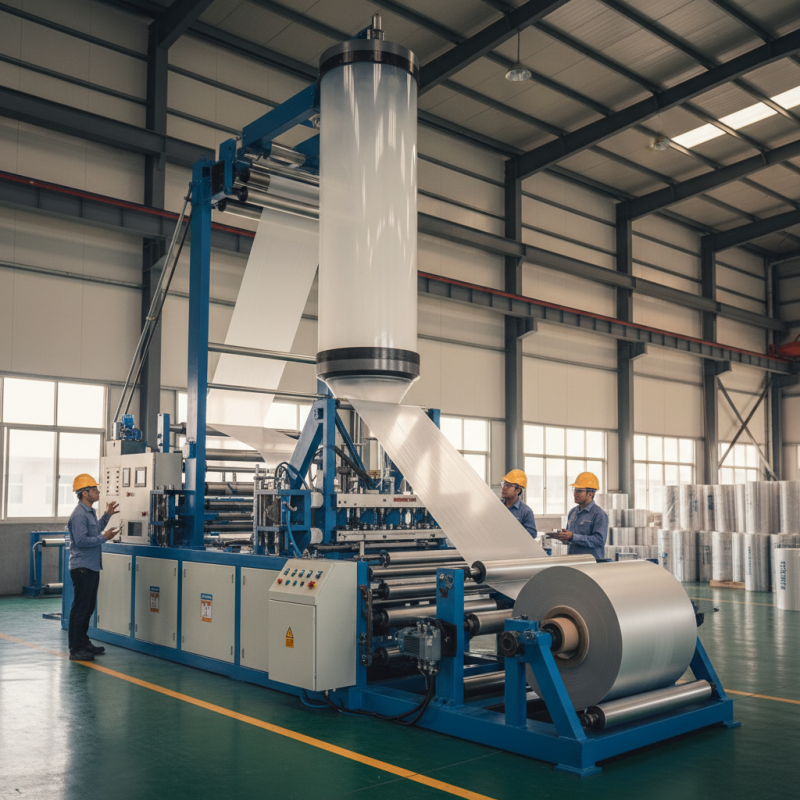
When considering production needs, an ABA blown film machine offers significant advantages. These machines excel in creating strong, durable films with excellent clarity. They use a three-layer co-extrusion system, which effectively maximizes film properties. This technology ensures consistent quality, an essential factor in competitive markets.
One of the key benefits is efficiency. ABA machines can produce films quickly while minimizing waste. This efficiency leads to cost savings for manufacturers. However, the initial investment may be high. It's important to evaluate whether the long-term gains can offset this upfront cost.
Flexibility is another advantage. These machines can handle various materials, providing versatility in production. But operators must invest time in training. Misunderstanding the machine's capabilities can lead to errors. It’s clear that while ABA blown film machines present many benefits, careful consideration and planning are essential for optimal results.
Key Advantages of Using ABA Blown Film Machines
Comparative Analysis: ABA vs. Other Blown Film Machines
When considering blown film production, ABA machines often stand out. They are known for their efficiency in producing high-quality films. According to industry reports, ABA machines can achieve better output rates compared to other configurations. The efficiency can reach 90% in optimal conditions, which is notable.
In contrast, other blown film machines may struggle to match this efficiency. The traditional dual-layer designs can limit versatility. The cost per unit is affected. An ABA machine allows for a broader range of applications, offering both cost-effectiveness and quality. Industry analysts report that companies using ABA machines see a 25% reduction in material usage for similar products.
However, it's important to note that not all ABA machines are equally effective. Some models face challenges like inconsistent thickness or bubble stability. Users need to assess their specific production needs. The balance between cost, efficiency, and quality should guide the decision-making process. This makes careful evaluation crucial for any production line considering an upgrade.
Applications and Industries Benefiting from ABA Film Production
The ABA blown film process is gaining traction across various industries. It's particularly effective in packaging, agriculture, and construction. According to a recent industry report, the global flexible packaging market is projected to reach $300 billion by 2027. This growth underscores the demand for high-quality films in diverse applications.
In the packaging sector, ABA films provide excellent strength and clarity. They offer great barrier properties, making them ideal for food packaging. Industry data shows that 63% of consumers prioritize packaging when making purchasing decisions. This statistic highlights how important it is to use high-quality films. However, not every machine on the market delivers the same performance.
Agricultural films are another key area. The use of ABA films in greenhouses can enhance crop yields significantly. Reports indicate that these films can increase production by up to 20%. However, the need to optimize thickness profiles remains. Some producers struggle with film consistency. Addressing these issues can lead to better end products and greater satisfaction. As industries evolve, so does the challenge to meet these growing demands effectively.
Factors to Consider When Selecting an ABA Blown Film Machine
When selecting an ABA blown film machine, several factors come into play. Understanding your production needs is crucial. A report from the Plastic Industry Association estimates that blown film production accounts for nearly 30% of the overall plastic manufacturing sector. This highlights the importance of choosing the right machine to meet specific requirements.
Material compatibility is one significant consideration. Different films require different properties. Many manufacturers often overlook this when investing in machinery. Data shows that 22% of production downtime is due to material mismatch. It's vital to ensure the machine can handle various resins effectively.
Production speed also plays a role. An efficient ABA blown film machine should offer high output without compromising quality. Industry standards suggest that plants should aim for at least 200 kg/hour for optimal efficiency. However, some facilities struggle with inconsistent speed, leading to waste. Balancing speed with quality often requires careful planning. Choosing a machine that allows flexibility is essential for adaptability in changing production landscapes.
Why Choose an ABA Blown Film Machine for Your Production Needs?
| Factor | Description | Importance Level |
| Material Compatibility | Ability to process various thermoplastics efficiently. | High |
| Production Speed | Maximum output speed that the machine can achieve. | Critical |
| Quality of Film | Consistency in thickness and clarity of the film produced. | High |
| User-Friendly Controls | Ease of operation and adjustment of parameters by operators. | Moderate |
| Energy Efficiency | Optimized power consumption to reduce operational costs. | High |
| Maintenance Requirements | Frequency and ease of maintenance needed for operation. | Moderate |
| Cost of Ownership | Initial investment and total cost over the machine's lifetime. | Critical |
 Skip to content


 English
 Russian
  German
  Spanish
  French
  Portuguese