SUNDI TOOLS
- Copyright © Wuxi Sundi Precision Tools Co.,LTD All rights reserved.
- Site Map
 Skip to content
Choosing a Villa Video Door Phone is not simply a matter of selecting the largest screen or sharpest camera. It is a security decision for a real property, with real people and daily routines. Bruce Schneier, a respected security technologist, offers a useful rule: “Security is a process, not a product.” His point fits villa communication systems perfectly.
A reliable choice should begin with the entrance environment. Measure the gate distance, wall thickness, cable route, and available power. Check whether the outdoor panel faces direct sunlight or heavy rain. A clear 1080p image may be useless if glare hides a visitor’s face. Night vision, wide-angle coverage, weather resistance, and infrared performance deserve practical testing.
The indoor monitor should be easy to use. Large icons help older residents answer calls quickly. Mobile access can improve convenience, but it also requires strong passwords and secure software updates. Verify whether the system supports encrypted communication, local recording, and controlled user permissions. These details are often overlooked.
Installation quality matters too. A premium device can perform poorly with loose wiring or weak network coverage. Ask suppliers for installation guidance, warranty terms, spare-part availability, and response times. Request a live demonstration, not only a product brochure. Try the call from the gate. Listen for echo. Test the lock-release delay.
There is no perfect model. A feature-rich system may create unnecessary complexity. A cheaper model may become expensive after repeated repairs. This guide examines the practical differences, technical specifications, and service conditions that help buyers choose a dependable Villa Video Door Phone for long-term use.
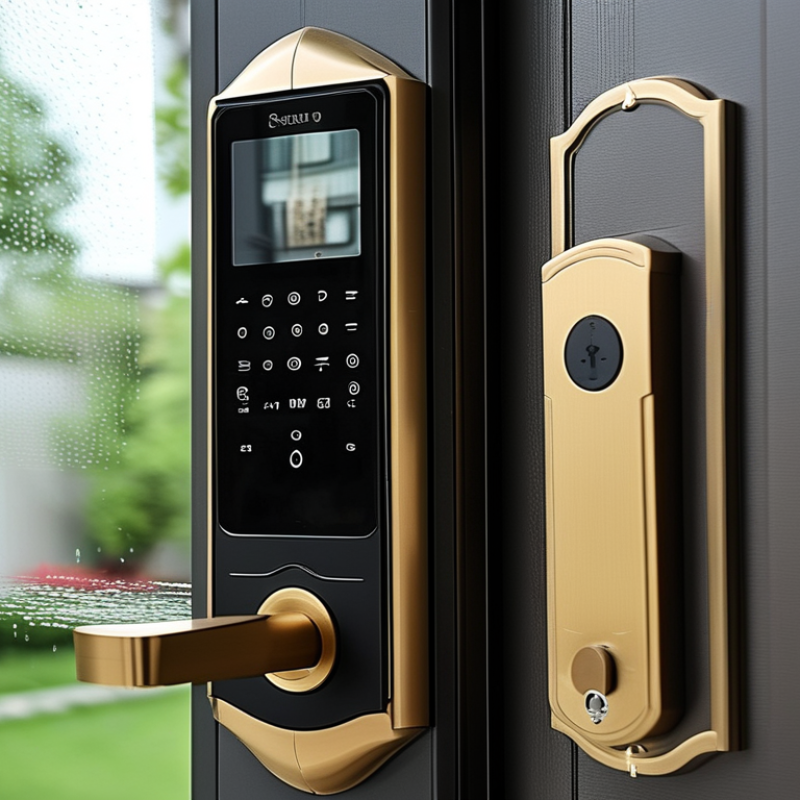
A villa video door phone is an access and communication system for private homes. It connects an outdoor camera station with an indoor monitor or mobile device. When a visitor presses the call button, the indoor screen rings and displays live video. A microphone and speaker then support two-way conversation.
The outdoor unit usually includes a camera, call button, speaker, microphone, and night lighting. Some models also support electronic locks, motion detection, recording, or several indoor screens. Wiring may use a dedicated cable or a network connection. Power can come through the same network cable, depending on the system. The process is quick. Press, view, speak, decide.
When choosing a villa video door phone from China, inspect the camera image in bright sunlight and near darkness. A wide viewing angle helps show parcels and faces beside the gate. Check whether the microphone stays clear when wind crosses the entrance. I have found that impressive screen size means little if the interface feels slow. That matters.
Review weather resistance, installation instructions, language options, and after-sales support. Confirm compatibility with the villa’s gate lock and existing wiring before purchase. Ask about data protection and software updates, too. Some features sound useful but become rarely used. Remote answering can be convenient, although it depends on a stable internet connection. A local monitor remains valuable when the network fails. Perfect systems are uncommon. Careful testing is better.
| Selection Dimension | What It Is / How It Works | Recommended Specification for a Villa | Why It Matters | Practical Check |
|---|---|---|---|---|
| System Structure | A villa video door phone normally includes an outdoor door station, one or more indoor monitors, an electronic lock, and a power supply. The door station sends audio and video to the indoor monitor, while the monitor controls communication and unlocking. | Choose a system supporting at least one outdoor station and two indoor monitors, with multi-unit expansion if the villa has several entrances or floors. | A scalable design avoids replacing the entire system when the property is extended. | Confirm the maximum number of doors, monitors, and extensions. |
| Video Resolution | The camera captures the visitor’s image and transmits it to the indoor monitor or mobile application. | At least 2 MP Full HD, with a clear image at the normal visitor distance. Higher resolution can be useful for large entrances. | Better image detail helps identify visitors and review events. | Test faces under both daylight and low-light conditions. |
| Viewing Angle | The horizontal and vertical field of view determine how much of the entrance area the camera can see. | A horizontal viewing angle of approximately 120° or more is suitable for many villa entrances. | A wider view reduces blind spots near gates, walls, and packages. | Check for image distortion and the actual coverage at the mounting height. |
| Night Vision | Infrared LEDs or low-light imaging allow the camera to display visitors when the entrance is dark. | Infrared night vision with a practical range of about 3–5 metres for a typical residential gate. | Visitors should remain visible at night without relying on permanent bright lighting. | Test night images for glare, overexposure, and face visibility. |
| Audio Communication | A microphone and speaker create two-way hands-free communication between the visitor and resident. | Full-duplex or echo-cancelled audio with adjustable volume and clear speech at the gate. | Clear audio is essential when the visitor’s face is not visible or the entrance is noisy. | Check audio clarity at the maximum recommended cable distance. |
| Wiring and Network | The system can use dedicated 2-wire cabling, Ethernet, or Wi-Fi depending on its architecture. Digital IP systems commonly use a local network for communication. | Use Ethernet or PoE for new structured installations; consider 2-wire systems when reusing existing villa wiring. | The correct topology affects installation cost, reliability, and future expansion. | Request a wiring diagram, cable limits, and voltage-drop requirements. |
| Indoor Monitor | The indoor monitor displays the visitor, provides two-way communication, and usually includes door-release and monitoring controls. | A 7-inch colour touch screen is a practical choice, with call transfer or room-to-room communication where required. | A clear interface makes the system easy for children, older residents, and guests to use. | Check screen brightness, viewing angle, language options, and response time. |
| Door Unlocking | After verifying the visitor, the resident activates a relay that releases an electric strike, magnetic lock, or motorised gate lock. | Support the lock voltage and current required by the entrance hardware, commonly 12 V DC for residential accessories. | Electrical compatibility prevents unreliable unlocking and premature hardware damage. | Verify fail-safe or fail-secure behaviour, exit hardware, and emergency release requirements. |
| Access Methods | In addition to indoor unlocking, some systems support RFID cards, PIN codes, QR codes, mobile access, or biometric functions. | Use at least two access methods, such as indoor release plus RFID or PIN access, with user management and deletion functions. | Multiple methods are convenient for residents, domestic staff, and temporary visitors. | Check whether lost cards and former users can be disabled immediately. |
| Mobile Connectivity | An internet-connected system can send call notifications to a smartphone and allow remote viewing or unlocking. | Choose secure app access with account authentication, notification control, and an option for local operation when the internet is unavailable. | Residents can respond to visitors when they are away from home. | Review data storage location, subscription fees, privacy policy, and offline behaviour. |
| Weather Protection | The outdoor station enclosure protects electronics from rain, dust, and outdoor exposure. | Prefer IP65 or better for a fully exposed entrance, with a sunshade or rain cover where direct weather exposure is severe. | Appropriate protection improves service life and reduces corrosion or water-related faults. | Check the enclosure rating, drainage design, gasket quality, and installation instructions. |
| Operating Temperature | The specified temperature range indicates the environmental conditions in which the outdoor station is designed to operate. | Select a model rated for the local climate; a common residential range is approximately −20°C to +50°C. | Extreme heat, cold, and condensation can affect camera, display, and lock performance. | Compare the rating with the site’s seasonal temperature and installation exposure. |
| Recording and Storage | The system may capture visitor snapshots or video clips and store them locally or in a cloud service. | Select event recording, encrypted storage, overwrite control, and a clear retention setting. Local storage is useful when internet access is unstable. | Recorded events help review missed visitors and security incidents. | Confirm storage capacity, export format, access permissions, and privacy compliance. |
| Safety and Security | Security features protect communication, user accounts, access credentials, and the door-release function. | Look for encrypted communication, unique administrator credentials, role-based access, firmware updates, and tamper detection. | A connected door phone should not become an unauthorised entry point or an exposed network device. | Ask about update support, password rules, vulnerability handling, and reset procedures. |
| Compliance and Documentation | Electrical, radio, and environmental compliance documents show whether the equipment is suitable for the destination market. | Request applicable conformity documents, safety information, installation drawings, user manuals, and test reports. | Complete documentation supports import, installation, maintenance, and regulatory review. | Check that documents match the exact model and intended sales region. |
| Supplier and After-Sales Support | A reliable supplier should provide sample testing, technical assistance, spare parts, firmware support, and warranty procedures. | Prefer clear warranty terms, documented quality inspection, stable spare-part availability, and support for custom languages or installation requirements. | Support quality directly affects installation time and long-term operating cost. | Request a pre-shipment sample, inspection checklist, response time, and replacement process. |


 English
 Russian
  German
  Spanish
  French
  Portuguese