SUNDI TOOLS
- Copyright © Wuxi Sundi Precision Tools Co.,LTD All rights reserved.
- Site Map
 Skip to content
Choosing the right Panda Keychain is more than selecting a cute black-and-white design. Global buyers must balance appearance, durability, safety, pricing, and dependable delivery. A soft plush panda may attract children and collectors, while a zinc-alloy version may suit corporate gifts, travel shops, and premium retail displays. Small details matter. Check the clasp strength, stitching, surface finish, printed colors, and keyring thickness before placing a large order.
Market evidence supports this product category. PPAI reported that United States promotional product sales reached approximately $26.1 billion in 2023, showing continued demand for practical branded merchandise. Grand View Research estimated the global toys market at about $108.7 billion in 2023, with design, gifting, and online retail supporting product variety. These reports do not measure panda keychains directly. That limitation matters. Still, they reveal the broader commercial environment surrounding character accessories and promotional goods.
For global sourcing, buyers should request material specifications, sample approval, factory photographs, and inspection records. Ask whether plush fabrics contain restricted substances and whether metal components resist corrosion. Depending on the destination, suppliers may need to address applicable product-safety and labeling requirements, such as EN 71, ASTM F963, or CPSIA provisions. Requirements differ by market. Never rely on a supplier’s vague promise. Review testing evidence from competent laboratories and confirm packaging details, including warning labels, barcode placement, and moisture protection.
A good Panda Keychain should survive a crowded backpack, not only a product photograph. Color accuracy can disappoint. Delivery estimates can change. Careful comparison remains essential for reliable international purchasing.
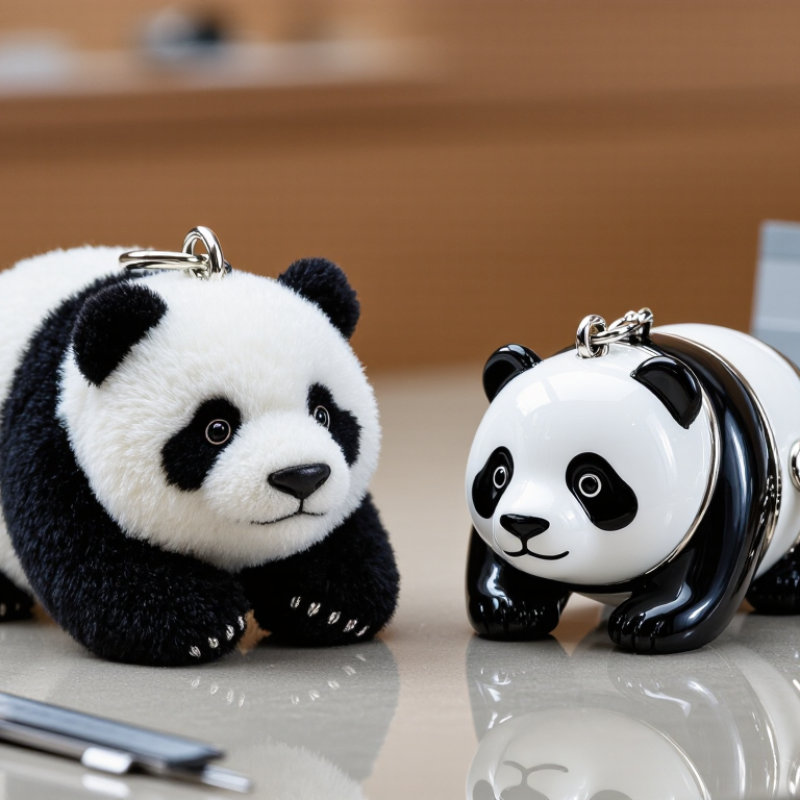
A panda keychain should solve a clear business need before its appearance is considered. For travel retailers, choose a compact design that clips securely to luggage and backpacks. For museum shops, emphasize educational details, such as bamboo leaves, habitat maps, or a short conservation fact. For children’s gift markets, use soft textures, rounded edges, and age-appropriate packaging. The target customer changes the product completely.
Know your buyer. Gen Z shoppers may value cute photography, collectible variations, and recyclable packaging. Corporate buyers may need consistent colors, barcode space, and reliable bulk delivery. The Promotional Products Association International reports that 83% of consumers enjoy receiving promotional products. Its research also shows usefulness strongly affects whether people keep them. A panda keychain should therefore hold keys securely, not merely look attractive.
Small details matter. Test the clasp with a loaded schoolbag. Check whether the printed eyes fade after repeated rubbing. Confirm the material, dimensions, country-of-origin label, and packaging requirements for each destination. Global buyers also need clear samples and stable production records. The ASI 2023 Ad Impressions Study found that 85% of recipients remembered the advertiser on a promotional item, but recognition alone does not guarantee repeat orders. I would avoid oversized charms for airport shops; they may photograph well, yet become inconvenient. That assumption still needs testing with local buyers.
| Target Market | Primary Purpose | Recommended Product Format | Suggested Size | Material Considerations | Attachment Hardware | Key Safety and Compliance Focus | Packaging Recommendation | Buying Priority |
|---|---|---|---|---|---|---|---|---|
| Children’s gift and souvenir retailers | Affordable gift, bag decoration, and animal-themed souvenir | Soft plush or rounded silicone panda keychain with simple facial details | Approximately 6–10 cm in height | Soft polyester plush or food-contact-free silicone; securely stitched or molded details | Nickel-free metal ring or short chain with smooth edges | Check small-part, sharp-edge, flammability, and chemical requirements for the destination market | Individual paper card or recyclable polybag with age and care information where required | Safety and durability |
| Tourist attractions, zoos, and cultural gift shops | Location-based souvenir that is easy to carry and display | Compact plush, embroidered fabric, or acrylic panda design with a regional motif | Approximately 5–9 cm in height | Colorfast fabric, clear acrylic, or durable molded plastic suitable for frequent handling | Standard split ring, lobster clasp, or swivel hook | Confirm print durability, material declarations, and packaging language requirements | Retail-ready hanging card with a short product story and country-of-origin information when applicable | Visual identity and shelf appeal |
| Corporate events and promotional campaigns | Branded giveaway, event memento, or campaign merchandise | Flat PVC, silicone, metal, or acrylic panda keychain with a defined logo area | Approximately 4–7 cm in height | Choose a surface that supports legible printing, embossing, engraving, or color separation | Lightweight split ring or swivel clasp to control shipping weight | Review ink adhesion, restricted substances, and packaging specifications before production | Bulk packaging with individual protective sleeves or counted inner bags | Logo clarity and delivery schedule |
| Fashion, lifestyle, and accessory retailers | Decorative accessory for handbags, backpacks, luggage, or keys | Premium plush charm, enamel-style metal charm, or minimalist acrylic design | Approximately 5–8 cm in height | Use dense fabric, polished metal, or scratch-resistant acrylic for a more premium appearance | Swivel clasp, lobster clasp, or reinforced key ring for repeated daily use | Test seams, plating, surface coating, color transfer, and connection strength | Branded paper sleeve, recyclable box, or reusable drawstring pouch | Finish quality and perceived value |
| Online marketplaces and direct-to-consumer sellers | Easy-to-ship novelty item with broad international appeal | Lightweight silicone, acrylic, or compact plush panda with a recognizable silhouette | Approximately 5–8 cm in height | Select materials that resist moisture, reduce breakage, and keep parcel weight low | Standard key ring or detachable clasp with reliable connection points | Provide accurate material, dimensions, care, and age information in the product listing | Compact recyclable mailer or small carton with protection against crushing | Shipping efficiency and product reviews |
| Collectors and limited-edition merchandise buyers | Display piece, numbered release, or themed collectible | Detailed enamel-style metal, high-density plush, or layered acrylic design | Approximately 6–10 cm in height | Use precise detailing, consistent color matching, durable coatings, and neat finishing | Polished ring, clasp, or decorative chain selected to match the product style | Protective coating, scratch prevention, accurate product description, and secure packaging | Printed collector card, rigid box, or molded insert for presentation and protection | Detail accuracy and presentation |
| Travel retailers and luggage-accessory buyers | Luggage identification, bag decoration, and travel souvenir | Durable silicone, PVC, or fabric panda tag with a strong attachment point | Approximately 6–9 cm in height | Prioritize abrasion resistance, flexible construction, and easy cleaning | Reinforced loop, buckle, carabiner, or heavy-duty split ring | Test pull strength, repeated bending, moisture exposure, and connection security | Hang tag with dimensions, material information, and care instructions | Durability and attachment strength |


 English
 Russian
  German
  Spanish
  French
  Portuguese