...

How to Choose the Right Construction Banner in 2026?

Construction sites are becoming busier, more competitive, and more visually demanding. In 2024, the U.S. Census Bureau reported construction spending at an annual rate of roughly $2.2 trillion. That scale creates pressure to communicate clearly, attract skilled workers, and protect a company’s public image.

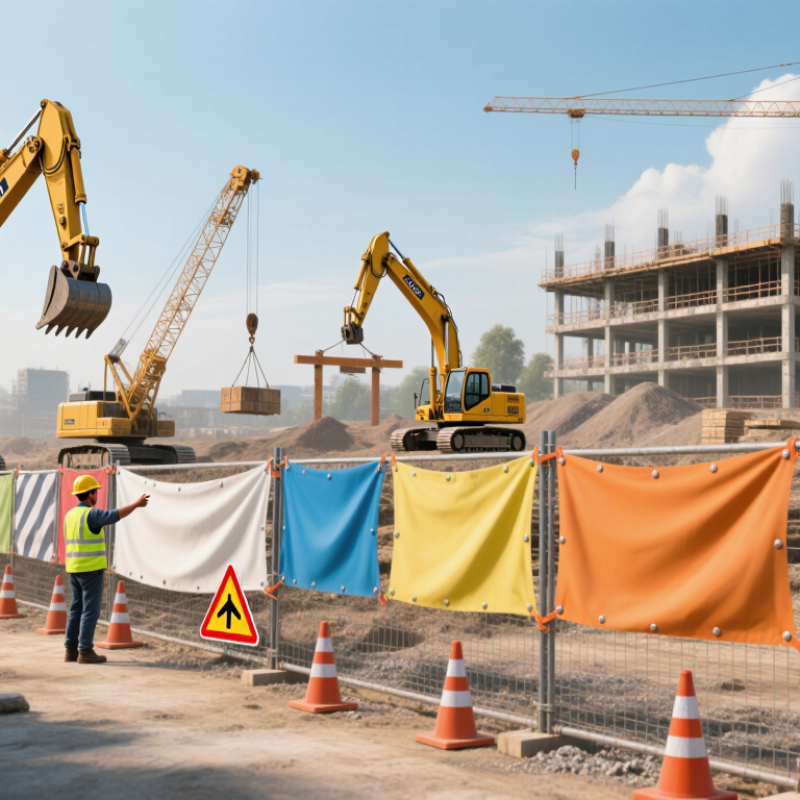
A well-planned Construction Banner can turn a temporary fence into a useful communication surface. It can display a project name, company identity, safety reminders, directions, or hiring information. The American General Contractors’ 2024 Workforce Survey found that many contractors still struggle to fill craft and salaried positions. A readable hiring banner may support recruitment, especially beside a busy road or site entrance.

Visibility matters.

However, appearance alone is not enough. OSHA’s construction standards require certain safety signs and tags to remain visible when hazards exist. A promotional banner must never replace required safety signage, warnings, or project instructions. It should support them.

Material choice also deserves careful attention. Sunlight, wind, dust, rain, and repeated handling can quickly expose weak printing or poor finishing. The 2024 Global Market Insights report identified continued growth in large-format digital printing, partly driven by durable outdoor graphics and promotional applications. Still, data does not guarantee a perfect result.

A banner can look excellent online and disappoint on a muddy fence. I have seen designs become unreadable because the text was too small and the background was too busy. This guide examines fabric, vinyl, size, mounting, artwork, durability, and total cost. The goal is practical judgment, not the cheapest possible purchase.
How to Choose the Right Construction Banner in 2026?

Define the Banner’s Purpose, Audience, and Placement

How to Choose the Right Construction Banner in 2026?

Define the Banner’s Purpose, Audience, and Placement

A construction banner should solve one clear communication problem. It may direct visitors, explain delays, promote a development, or improve site visibility. Define that purpose before choosing materials, colors, or dimensions. A banner designed for passing drivers needs different wording from one viewed by workers near an entrance.

Know who will read it.

Consider the audience’s distance, language ability, and available reading time. Drivers may see your message for three seconds. Visitors might stand nearby and read several lines. Use large type, strong contrast, and one useful call to action. Avoid filling every empty space. On busy sites, short wording usually performs better than clever wording.

Placement changes the design completely. Measure the viewing distance, mounting height, wind exposure, and surrounding clutter. A banner beside heavy equipment needs bold shapes and durable eyelets. One attached to temporary fencing may need reinforced edges and smaller panels. Check whether dust, rain, or direct sunlight will affect visibility. Field experience shows that banners often fail because placement is treated as an afterthought.

It is easy to overestimate readability.

Before production, print a small-scale proof and view it from the actual approach. Walk past it at normal speed. If the main message disappears, revise it. I have found that attractive designs can still communicate poorly when the audience is tired, hurried, or distracted. Review the banner after installation, too. Site conditions change, and the original plan may not survive contact with reality.


Compare Construction Banner Materials and Printing Methods

How to Choose the Right Construction Banner in 2026?

Material choice controls durability, visibility, and installation speed. PVC-coated polyester remains a practical option for solid, long-term barriers. Its smooth surface produces sharp text and dense color. Mesh banners reduce wind pressure around scaffolding. Thousands of small openings let air pass through. However, mesh can soften fine lettering and weaken pale colors. Polyester fabric feels lighter and photographs well, but moisture and rough handling may shorten its useful life.

Printing method matters as much as substrate. Solvent and eco-solvent printing offer strong outdoor color, especially on flexible PVC. UV printing cures ink directly on the surface. It supports quick production and crisp small details, though excessive ink can make folding difficult. Dye-sublimation bonds color into polyester fibers. It avoids surface cracking during repeated handling. Grand View Research estimated the global digital printing market at about USD 36 billion in 2023, with continued growth through 2030. That growth reflects faster, customized production, not automatic quality.

FESPA’s 2023 Print Census surveyed printers across more than 60 countries and identified sustainability as a major industry concern. Ask whether the banner can be reused, repaired, or separated after removal. I still see teams choosing solid PVC for exposed scaffolds without checking wind loads. That is an expensive mistake. Measure the viewing distance, attachment spacing, expected weather, and campaign duration before approving artwork. A mesh banner may be safer near open structures, while UV-printed PVC may suit a short, high-impact hoarding. None is perfect. That is the uncomfortable part.

Assess Visibility, Weather Resistance, and Expected Lifespan

In 2026, choosing a construction banner starts with the distance between the message and its reader. Visit the site at noon, dusk, and under dusty light. A banner readable from 30 metres needs large lettering, strong contrast, and generous spacing. Do not judge visibility from a phone screen. Walk past it. Check whether cranes, fencing, or parked vehicles hide key words. Reflective or illuminated surfaces can help, but glare may reduce legibility. A short viewing test with actual workers is more useful than attractive artwork.

Weather resistance depends on exposure, not just advertised material thickness. For open fencing, inspect UV stability, waterproofing, reinforced hems, and closely spaced eyelets. These details reduce tearing when wind pulls against the banner. In rainy areas, check how printed surfaces dry after repeated wetting. A small sample left outdoors for several days can reveal curling, fading, or water absorption. That test is imperfect. Still, it exposes assumptions that a product sheet may miss. Secure the banner without blocking drainage or creating loose edges.

Expected lifespan should match the project schedule and replacement access. A temporary sign may last three months, while a long build can require a year or more. Ask for test methods, estimated outdoor duration, and maintenance instructions. Record the installation date and photograph the banner monthly. Clean dust gently; harsh tools can damage the print layer. From my site experience, neglected edges fail before the center. I would allow a replacement margin in the budget. That is not pessimism. It is practical planning when weather and schedules change.

Check Safety Standards, Permits, and Site Requirements

Choosing a construction banner in 2026 starts with safety, not color or price. On active sites, a banner can affect visibility, traffic flow, and worker behavior. I have seen attractive signs fail because glare hid critical wording at dusk. Check the banner’s fire rating, tear resistance, wind tolerance, and print legibility. Requirements vary by location and use. Ask a qualified safety officer to review the proposed material before ordering.

Permits deserve equal attention. Contact the local building, road, or planning authority before installation. Some sites require approval for size, lighting, mounting height, or placement near public paths. Keep written confirmation with the project records. A verbal answer may not protect the site later. Check whether the permit covers temporary signage, construction fencing, and project changes. Rules can differ between private land and public space.

Measure the site in person. Note fence spacing, vehicle sightlines, prevailing wind, dust, noise, and emergency access. A banner that works on a quiet lot may become dangerous beside moving equipment. Use high-contrast text, plain warnings, and weather-resistant fasteners. Leave enough tension to prevent flapping, but not so much that eyelets tear. I once underestimated wind exposure on an open corner. The replacement cost was avoidable. Review the installation after rain and strong wind. Small failures often appear first.

Choose Banner Size, Mounting System, and Supplier

In 2026, construction banners must fit the site, not merely fill empty space. Measure the fence, scaffold, or building face before selecting dimensions. Measure twice. A banner viewed from a passing road needs larger lettering than one beside a pedestrian walkway. Leave clear margins around logos, phone numbers, and safety messages. Crowded artwork becomes difficult to read. Choose reinforced hems and evenly spaced grommets for windy locations. Mesh fabric can reduce wind pressure, but it may weaken small text and detailed graphics.

The mounting system should match the surface and expected weather. Cable ties suit short-term fence displays, while tension cables provide a cleaner, more stable finish. For scaffold installation, use secure attachment points without blocking access, lighting, or inspection areas. Check the banner after strong wind or heavy rain. It may look secure at installation, then loosen later. That is an easy detail to overlook. Avoid placing fasteners where sharp edges can tear the fabric or injure workers.

A dependable supplier should explain fabric weight, print durability, finishing options, and estimated production time in writing. Request a physical sample or color proof before approving a large order. Ask for documentation about flame performance when the project requires it. Confirm whether the supplier can replace damaged panels quickly. The cheapest quote is not always economical if the eyelets pull out after one storm. Clear communication matters. Review measurements, artwork, delivery dates, and installation requirements together. Mistakes still happen, but a transparent supplier makes them easier to identify and correct.

en_USEnglish

PCD Inserts

PCBN Inserts

Solid CBN Inserts

PCD Milling Cutter

PCD Drilling Tools

PCD Reamer

Diamond Special Tool

Diamond Dressers