How to Choose a Helical External Gear Pump?
Choosing a Helical External Gear Pump is not a catalogue exercise. It is a duty-matching decision. The pump must suit pressure, flow, fluid viscosity, temperature, speed, and installation conditions. A mismatch may produce noise, heat, leakage, or early wear.
Dr. Richard M. Ivantysyn, a respected hydraulic-pump researcher, once stated, “Pump selection begins with the duty point, not the product label.” That principle remains useful. Measure the application before comparing models. Record the required flow at operating speed. Check pressure at the pump outlet, not only the system’s maximum rating. Then examine the fluid carefully. Thin oils can increase internal slip. Thick fluids can overload the drive during cold starts.
Small details matter. Listen for a sharp whine near the coupling. Look for foaming in the reservoir. Check whether the suction line is short, straight, and adequately sized. A Helical External Gear Pump can deliver smooth flow and reduced pulsation, but it cannot correct poor plumbing or contaminated fluid.
Experience also introduces uncertainty. A calculated flow rate may differ from field performance. Temperature changes can alter viscosity. A pump selected for average conditions may struggle during startup. That risk deserves attention.
This guide explains how to compare displacement, materials, sealing options, pressure ratings, efficiency, noise, and service requirements. It also highlights common selection mistakes. Some are easy to miss. The best choice is rarely the largest pump. It is the pump that operates reliably within the real application’s limits.
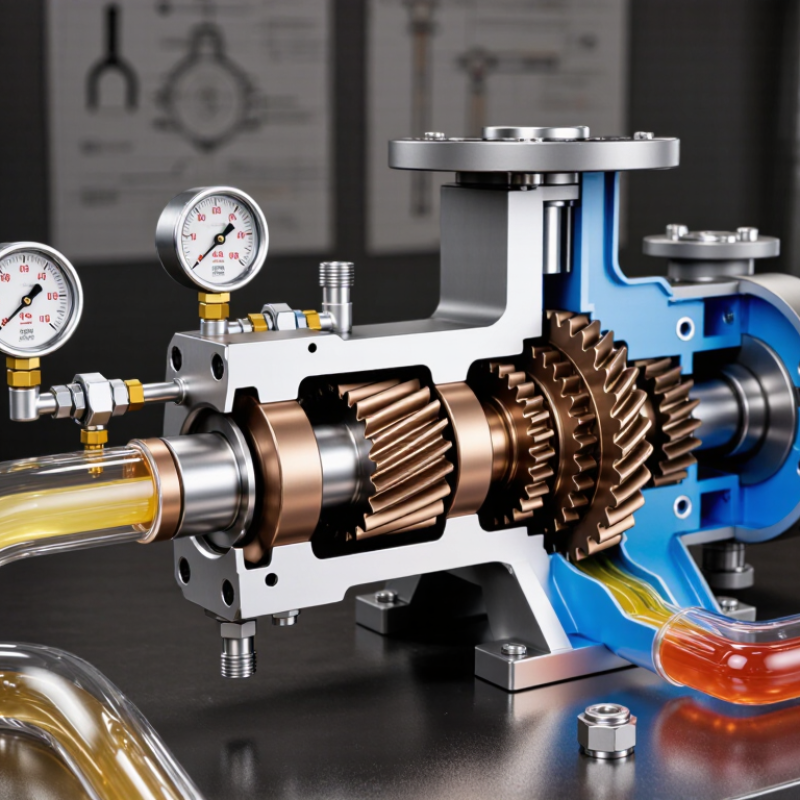
Identify Flow, Pressure, Speed, and Viscosity Requirements Before Selection
Choosing a helical external gear pump starts with four operating facts: flow, pressure, speed, and viscosity. Record the required flow in L/min, not only the pipe size. A pump’s theoretical flow equals displacement multiplied by speed, while actual flow falls because of slip.
The U.S. Department of Energy reports that pumping systems can consume about 25% of industrial facility electricity, so oversizing the pump wastes more than purchase cost.
Pressure & Speed
Pressure must be separated into continuous, peak, and relief-valve conditions. A helical gear profile can reduce pulsation and noise, but it cannot remove system resistance. Measure pressure at the pump outlet and inlet during cold and hot operation.
Operating Range
Then check shaft speed against the pump’s allowable range. Excessive speed may increase shear, heat, and bearing load. Slow rotation may cause insufficient flow or unstable lubrication.
Viscosity: The Overlooked Variable
Viscosity is often the overlooked variable. ISO 3448 viscosity grades help standardize selection, but the actual fluid temperature still matters. High viscosity raises starting torque; low viscosity increases internal leakage. Confirm the minimum, normal, and maximum viscosity in cSt.
Also check fluid compatibility and cleanliness under ISO 4406. A clean datasheet is not enough. Field readings can disagree with design assumptions.
Selection principle
I would leave a safety margin, but not an oversized one, because that choice is easy to defend and expensive to operate.
Match Helical Tooth Geometry to Displacement, Efficiency, and Noise Targets
How to Choose a Helical External Gear Pump?
Helical tooth geometry should match displacement, efficiency, and noise targets. A greater helix angle increases tooth overlap. This usually smooths torque transfer and reduces pressure ripple. The result can be quieter operation at steady speed. However, helical teeth create axial thrust. They can also increase sliding losses and bearing load. ISO 4409:2019 recommends evaluating displacement, flow, torque, and efficiency through controlled testing. Do not select by theoretical displacement alone. Clearance, viscosity, temperature, and speed can change delivered flow. Real conditions matter.
The U.S. Department of Energy’s Pumping System Sourcebook estimates pumping systems consume about 27% of industrial motor-system electricity. The IEA’s Energy Efficiency 2023 analysis also places electric motor systems near half of global electricity demand. These figures make small efficiency losses significant. For high flow, choose a geometry that limits slip without excessive friction. For noise-sensitive equipment, prioritize contact overlap and casing stiffness. My first calculation is often too optimistic. That shortcut can fail.
Tips: Compare measured volumetric efficiency at operating temperature. Check axial thrust with the selected helix angle. Ask for noise data across the working speed range, not only one test point. A slightly lower displacement may outperform a larger pump running near its limit.
Compare Efficiency, NPSH, Service Life, Standards, and Total Ownership Cost
How to Choose a Helical External Gear Pump?
A helical external gear pump suits applications requiring steady flow, compact installation, and accurate dosing. Its angled teeth usually reduce pulsation and operating noise compared with straight-cut gears. However, efficiency depends on viscosity, speed, pressure, clearance, and fluid temperature. A pump that performs well with warm oil may lose efficiency with a thin solvent. Check both volumetric and mechanical efficiency at the actual duty point.
NPSH deserves careful attention. Calculate NPSH available from the tank, pipework, fluid temperature, and inlet losses. Then compare it with the pump’s NPSH required at the selected speed. Keep a practical margin. Starved suction can cause noise, vibration, and rapid wear. Oversizing the pump is another common mistake. It may force throttling, increase slip, and waste energy. A variable-speed drive can improve control, but it adds purchase and maintenance costs.
Service life depends on clean fluid, correct alignment, suitable materials, and reliable filtration. Confirm pressure, temperature, shaft seal, and elastomer compatibility. Review applicable requirements, such as API 676 for rotary positive displacement pumps, while checking local safety and installation rules. Do not treat certification alone as proof of suitability. Compare total ownership cost, including energy, seals, filters, downtime, inspections, and spare parts. The cheapest pump can become expensive quickly. A detailed duty profile is worth the effort, although real operating conditions are often less stable than the specification suggests.
 Skip to content


 English
 Russian
  German
  Spanish
  French
  Portuguese