SUNDI TOOLS
- Copyright © Wuxi Sundi Precision Tools Co.,LTD All rights reserved.
- Site Map
 Skip to content
Choosing reliable Dishwasher Tooling manufacturers can shape a dishwasher’s quality, cost, and production stability. Global buyers need more than attractive quotations. They need suppliers with proven engineering experience, controlled manufacturing processes, and dependable after-sales support.
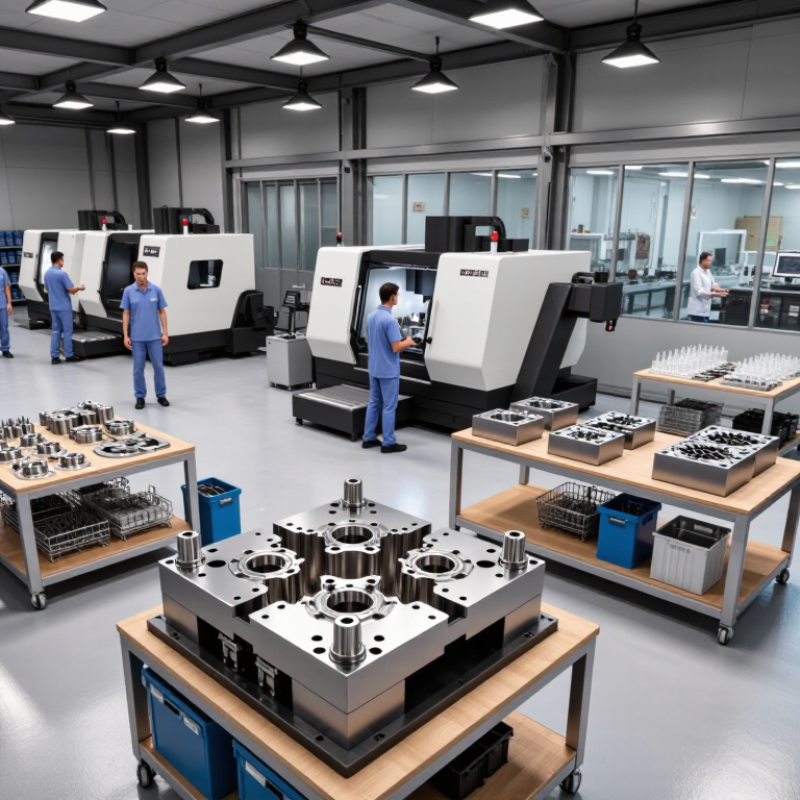
This guide introduces leading manufacturers serving international appliance markets. It considers mold design, material selection, machining accuracy, cooling performance, and production capacity. A strong supplier should explain how its tooling supports spray arms, racks, filters, tubs, and related components. Factory audits also matter. Look for organized workshops, calibrated inspection equipment, documented testing, and clear communication from design review to final delivery.
Details reveal capability. A technical team should discuss steel grades, mold-life expectations, cycle-time targets, and maintenance access. It should also provide realistic timelines, not optimistic promises. Some manufacturers excel at complex plastic injection molds, while others perform better with sheet-metal or precision assembly tooling. No supplier is perfect. Buyers must verify references, inspect samples, and question unclear claims. That step is easy to skip.
Practical experience often separates a workable tool from an expensive problem. Shipping protection, spare parts, repair response, and engineering changes can affect the total investment. Regional service coverage may also reduce downtime. This overview aims to help procurement teams compare manufacturers with greater confidence, while recognizing that final selection depends on product design, annual volume, budget, and technical risk. Good tooling begins with evidence.
Top Dishwasher Tooling Manufacturers for Global Buyers?
Dishwasher tooling starts with repeatable measurement, not attractive mold surfaces. IEC 60436 defines performance test methods for household dishwashers, including cleaning, drying, energy, and water use. Tooling should control rack loading, detergent placement, soil distribution, and test conditions. Small fixture errors can change results. They can also distort supplier comparisons.
Safety requires a wider view. IEC 60335-1 and IEC 60335-2-5 address electrical and appliance-specific risks. Regional requirements may add leakage current, grounding, insulation, temperature, and electromagnetic compatibility checks. A reliable manufacturer should provide material records, dimensional reports, calibration certificates, and revision control. Test fixtures need guarded moving parts and clear access for inspection. I have seen accurate tooling fail because operators used inconsistent loading methods. That weakness deserves honest review.
Tips: Ask for a validation plan before approving production tooling. Confirm gauge repeatability and measurement uncertainty. Check whether the supplier can simulate local voltage, water hardness, and detergent conditions. Request sample data from several trial cycles, not one successful run. Keep spare wear parts available. Perfect repeatability is difficult, so document every assumption and revisit it during field testing.
| Tooling Category | Typical Dishwasher Component | Primary Manufacturing Process | Common Tooling Material | Key Buyer Specification | Relevant Standard or Compliance Reference | Validation Priority | Typical Global Buyer Evidence |
|---|---|---|---|---|---|---|---|
| Injection Molds | Inner door panel, detergent dispenser housing, spray-arm parts, control-panel carrier | Multi-cavity injection molding; hot-runner or cold-runner configuration selected according to resin and production volume | Pre-hardened or hardened mold steel; corrosion-resistant grades are preferred for water-exposed applications | Parting-line control, shrinkage compensation, gate location, cooling balance, ejection marks, and mold-life target | IEC 60335-2-5 for dishwasher safety; IEC 60436 for dishwasher performance measurement; material restrictions may also involve RoHS requirements | High | Dimensional report, mold-flow study where needed, first-article samples, resin traceability, and mold-maintenance schedule |
| Sheet-Metal Stamping Dies | Outer door skin, base frame, brackets, reinforcement members, and mounting plates | Progressive, transfer, or single-operation stamping followed by bending, piercing, and forming | Tool steel or carbide inserts for high-wear cutting and forming areas | Blank layout, material thickness, bend allowance, burr direction, springback control, and safe edge condition | IEC 60335-1 and IEC 60335-2-5 for appliance construction and safety; mechanical drawings should define applicable geometric tolerances | High | Steel certificate, dimensional inspection, burr inspection, tryout records, and samples from the intended production line |
| Deep-Draw Dies | Stainless-steel wash tub or sump-related formed parts | Deep drawing, redraw, trimming, piercing, and flanging | Hardened tool steel with polished forming surfaces; wear-resistant inserts may be used at high-load areas | Draw ratio, corner radius, thinning control, wrinkling prevention, surface finish, and leak-tight geometry | IEC 60335-2-5 safety requirements; IEC 60436 performance tests can expose leakage, loading, and water-distribution issues during validation | Critical | Material certificate, wall-thickness map, leak test, surface inspection, and repeatability data after production cycles |
| Profile and Roll-Forming Tooling | Door frames, rails, structural channels, and long reinforcement profiles | Roll forming, calibrated bending, cutting, and end-forming operations | Hardened tool steel or wear-resistant forming inserts | Profile stability, straightness, twist, cut-length accuracy, and compatibility with coated or stainless sheet | IEC 60335-1 and IEC 60335-2-5 for safety-related construction; coating and corrosion requirements should be defined by the appliance design specification | High | Profile gauge report, straightness measurement, coating-protection records, and line-speed capability test |
| Compression or Transfer Molds | Rubber door gaskets, vibration isolators, seals, and flexible mounts | Compression molding or transfer molding using elastomer compounds | Hardened mold steel with polished sealing surfaces and replaceable wear components | Flash control, sealing geometry, compression set, temperature resistance, and chemical compatibility with detergents | IEC 60335-1 and IEC 60335-2-5; elastomer selection should be verified against detergent, rinse-aid, heat, and humidity exposure | Critical | Compound specification, hardness report, compression-set data, aging test, dimensional report, and leak-test results |
| Extrusion Dies | Door seals, tubing, trim profiles, and protective edge sections | Single- or multi-material extrusion followed by calibration, cutting, and assembly | Wear-resistant tool steel with polished flow channels | Profile dimensions, wall thickness, weld-line quality, cut-length control, and continuous dimensional stability | IEC 60335-1 and IEC 60335-2-5 for appliance safety; electrical insulation-related parts require material and construction verification by the appliance manufacturer | High | Continuous profile inspection, material batch records, dimensional capability data, and accelerated aging results |
| Rotational or Blow-Molding Tooling | Water tanks, air ducts, reservoirs, and selected polymeric housings | Rotational molding or blow molding, depending on wall thickness, geometry, and production volume | Aluminum or steel mold construction selected according to cycle time and surface-finish requirements | Wall-thickness distribution, weld-line strength, deformation control, drainability, and leak resistance | IEC 60335-2-5 for dishwasher safety; IEC 60436 test procedures may be used to assess performance effects related to water flow and capacity | Critical | Wall-thickness report, pressure or leak test, dimensional inspection, material declaration, and process-capability results |
| Assembly and Checking Fixtures | Door assemblies, rack systems, spray arms, pump modules, and control assemblies | Dedicated assembly fixtures, poka-yoke devices, gauges, and functional test stations | Aluminum, engineering plastics, hardened pins, and replaceable wear inserts | Datum strategy, error-proofing, operator safety, quick changeover, calibration intervals, and access for service | IEC 60335-1 and IEC 60335-2-5; electrical test equipment may also be required for continuity, insulation, leakage-current, or dielectric-strength checks | Critical | Gauge calibration certificate, fixture acceptance test, work instructions, poka-yoke verification, and capability study |
| Performance-Test Fixtures | Complete dishwasher installation and standardized loading configuration | Test rigs for water supply, drainage, electrical input, loading, temperature, noise, and cleaning-performance evaluation | Stainless steel, corrosion-resistant aluminum, engineering plastics, and calibrated measurement hardware | Repeatable installation conditions, water temperature, water hardness, detergent dosage, loading pattern, and measurement uncertainty | IEC 60436 provides methods for measuring household dishwasher performance; local energy and safety rules may add market-specific requirements | Critical | Calibration records, test method revision, measurement-uncertainty statement, reference load, and repeatability results |
| Electrical Safety Test Fixtures | Finished appliance and electrical subassemblies during production inspection | Automated or semi-automated test fixtures for protective-earth continuity, insulation resistance, dielectric strength, and leakage current | Insulated engineering plastics, copper or brass contacts, stainless hardware, and certified measurement instruments | Test voltage, dwell time, current limits, interlock design, emergency stop, data logging, and calibration control | IEC 60335-1 and IEC 60335-2-5 are key appliance-safety references; national certification schemes may impose additional testing and documentation | Critical | Instrument calibration, test-program validation, protective-earth verification, operator-safety assessment, and traceable test records |
| Supplier-Selection Dimension | Applies to all tooling categories | Engineering design, machining, tryout, inspection, production support, and after-sales maintenance | Must be stated by the supplier with grade, heat treatment, hardness, and replacement-part information | Engineering change control, spare-part availability, tool ownership, warranty scope, maintenance response, and export packing | Compliance should be demonstrated through applicable test reports and technical files rather than claimed solely from a tooling supplier certificate | High | Capability profile, quality-management evidence, inspection equipment list, project references without confidential brand disclosure, and acceptance criteria |


 English
 Russian
  German
  Spanish
  French
  Portuguese