...

Top 10 Types of Quick Connect Couplers for Global Buyers

Choosing the right Quick Connect Couplers can shape equipment safety, maintenance speed, and long-term operating costs. Global buyers often compare price first, but connection design deserves equal attention. A coupler used on a hydraulic excavator faces different demands from one installed on a pneumatic assembly line. Pressure, flow rate, working temperature, media compatibility, and connection frequency all influence the final choice.

This guide examines ten common types, including hydraulic, pneumatic, flat-face, threaded, cam-and-groove, and dry-break designs. Each type has practical strengths and limits. For example, flat-face couplers can reduce fluid loss during connection, while cam-and-groove couplings support fast handling in suitable transfer applications. The best option still depends on verified specifications and actual service conditions. It sounds simple.

In purchasing work, I have seen small dimensional differences create expensive delays. A mismatched thread standard may stop installation, even when the coupler looks correct. Buyers should confirm port size, sealing material, rated pressure, temperature range, and interchangeability before ordering. Manufacturer drawings, test reports, and traceable quality records provide stronger evidence than marketing claims alone. Regional standards and local technician experience also deserve attention.

No catalogue replaces field judgment. Dust, vibration, corrosive chemicals, and repeated coupling cycles can change performance over time. Some product descriptions also leave important details unclear. That is why this overview encourages careful comparison, supplier verification, and realistic risk assessment. The goal is not to identify one universal coupler, but to help global buyers select a dependable connection for each application.
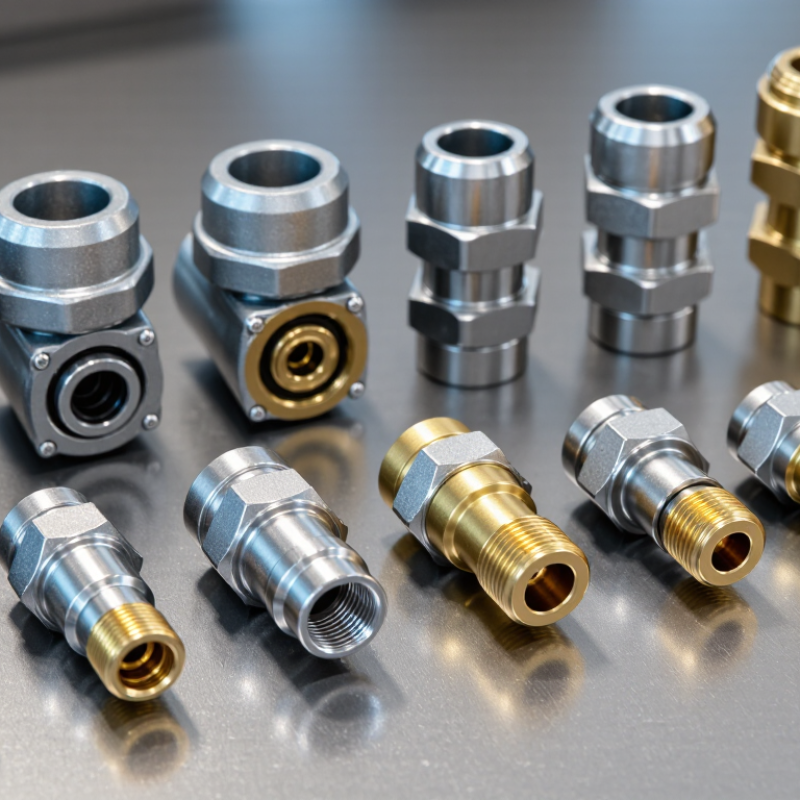
Top 10 Types of Quick Connect Couplers for Global Buyers

Quick Connect Couplers: Definition, Structure, and Operating Principles

Quick connect couplers join fluid lines without requiring tools, making maintenance faster and cleaner. Their structure usually includes a plug, socket, locking sleeve, valve, seal, and body. When connected, internal poppet valves open and create a continuous flow path. When disconnected, the valves close to limit leakage and contamination.

Common types include hydraulic, pneumatic, flat-face, screw-to-connect, cam-and-groove, dry-break, electrical, multi-coupling, thermoplastic, and instrument couplers. Selection depends on pressure, temperature, fluid compatibility, flow rate, and connection frequency.

ISO 7241 covers several hydraulic coupler dimensions, while ISO 16028 addresses flat-face designs. These standards improve interchangeability, but they do not remove every application risk.

A 2024 Grand View Research report valued the global hydraulic equipment market at about USD 49.1 billion in 2023, with continued growth expected through 2030. This supports wider demand for reliable connection systems, not proof that every coupler suits every machine.

A practical inspection checks the locking sleeve, seal condition, surface damage, and pressure rating. Keep it simple. One overlooked seal can stop a production line.

I have found that catalog flow data often looks cleaner than field performance. Cold weather, hose movement, trapped pressure, and dirty work areas can change the result. Buyers should test the complete assembly under realistic conditions.


Ten Major Coupler Types by Connection Design and Fluid Service

Top 10 Types of Quick Connect Couplers for Global Buyers

Quick connect couplers differ by locking method, sealing design, and fluid duty. Threaded couplers suit high-pressure hydraulic oil and resist vibration. Cam-and-groove couplers connect hoses quickly for water, fuel, and agricultural liquids. Bayonet couplers use aligned pins and a quarter-turn lock. They work well where repeated assembly is common. Ball-lock couplers use spring-loaded balls for hydraulic tools and compact equipment. Push-To-Connect Couplers simplify pneumatic air lines with minimal hand force.

Screw-to-connect couplers offer strong retention in demanding hydraulic circuits. Flat-face hydraulic couplers reduce fluid loss and contamination during connection. Dry-break couplers provide extra spill control for chemical, fuel, and process-fluid transfer. Flanged couplers handle larger pipe sizes, thermal movement, and fixed industrial installations. Pneumatic quick couplers, often plug-in or sleeve-lock designs, support air tools, automation, and low-pressure gas service. Not every coupler suits every medium.

Material selection needs practical checking. Stainless steel may support corrosive service, while plated carbon steel can reduce cost. Seal compounds must match temperature, pressure, and fluid chemistry. A seal that survives oil may swell in a solvent. I also check hose size, flow demand, connection frequency, and accidental-disconnect risk. Standards help, but they do not replace application testing. A catalog choice can still fail when pressure spikes, dirt, or side loading appears. Clean the mating surfaces before connection. Confirm that both halves lock fully. Small details matter.

Top 10 Types of Quick Connect Couplers for Global Buyers - Ten Major Coupler Types by Connection Design and Fluid Service

No. Coupler Type Connection Design Typical Fluid Service Common Size Range Key Advantages Main Considerations Typical Applications
1 Ball-Lock Coupler A sleeve-operated locking mechanism uses multiple steel balls to secure the plug in a matching groove. Hydraulic oil, compressed air, water, and general industrial fluids. Approximately DN 5 to DN 50, depending on design and pressure class. Fast one-handed connection, broad availability, and good mechanical retention. The exposed locking sleeve and balls can be affected by dirt; connection should not be forced under residual pressure. Hydraulic tools, pneumatic equipment, test systems, and mobile machinery.
2 Sleeve-Lock Coupler A sliding outer sleeve locks the male and female halves together, commonly with balls or locking pins. Hydraulic fluids, air, water, coolants, and selected chemicals. Approximately DN 6 to DN 50 for general industrial designs. Simple operation, reliable retention, and many available seal and material options. Pressure, temperature, and chemical compatibility vary considerably by seal material and construction. Industrial hose assemblies, instrumentation, fluid transfer lines, and service equipment.
3 Flat-Face Coupler Two flat mating faces seal together, reducing the fluid cavity exposed during disconnection. Hydraulic oil, water-glycol fluids, and other clean industrial fluids. Approximately DN 6 to DN 50; larger sizes are available for special systems. Low spillage, low air inclusion, easy cleaning, and good resistance to external contamination. Mating faces must be kept clean; trapped pressure can prevent connection or cause damage. Construction machinery, hydraulic attachments, agricultural equipment, and mobile service systems.
4 Dry-Break Coupler Valves open only after the two halves are correctly engaged and close before separation. Fuel, oil, chemicals, refrigerants, coolants, and other fluids requiring controlled release. Approximately DN 6 to DN 100, depending on flow and service requirements. Very low spillage, reduced vapor release, and limited air or moisture entry. Higher purchase cost, greater pressure drop in some designs, and strict seal compatibility requirements. Chemical transfer, fuel handling, battery cooling, marine systems, and process equipment.
5 Screw-to-Connect Coupler Threaded sleeves or nuts mechanically draw the two halves together and maintain a strong connection. High-pressure hydraulic oil, water, gas, and demanding industrial fluids. Approximately DN 6 to DN 50 in high-pressure applications. High pressure capability, strong resistance to vibration, and improved resistance to accidental uncoupling. Slower than push or sleeve types; threads must be clean and fully engaged. Hydraulic power units, drilling equipment, heavy machinery, and high-pressure test circuits.
6 Cam-and-Groove Coupler Two external cam arms engage a groove on the male adapter without using threads. Water, non-hazardous chemicals, fuels, agricultural liquids, and dry bulk materials with suitable designs. Approximately DN 15 to DN 200 or larger for low- and medium-pressure transfer. Very quick manual operation, no tools required, and convenient for frequent hose changes. Generally unsuitable for high-pressure hydraulic service; cam arms require protection from accidental impact. Tanker loading, irrigation, dewatering, chemical transfer, and bulk handling.
7 Twist-Lock Coupler A quarter-turn or multi-turn rotation engages locking lugs, bayonet features, or a threaded locking sleeve. Water, air, hydraulic fluids, coolants, and selected chemical services. Approximately DN 6 to DN 100, depending on the locking design. Compact profile, strong resistance to pull-off, and suitability for confined installation spaces. Correct rotational alignment is necessary; locking surfaces should be protected from contamination and wear. Process skids, cooling circuits, pneumatic lines, and equipment with limited access.
8 Push-to-Connect Coupler The plug is pushed into the socket until internal locking elements engage automatically. Compressed air, low-pressure water, vacuum, and selected low-pressure fluids. Approximately DN 2 to DN 25 for compact pneumatic and instrument systems. Fast connection, compact construction, and convenient use in repetitive operations. Pressure and temperature ratings are often lower than heavy-duty hydraulic couplers; accidental release protection may be needed. Pneumatic tools, automation equipment, laboratory lines, and instrumentation.
9 Bayonet Coupler Axial insertion followed by a short twist locks pins or lugs into matching slots. Air, water, coolant, hydraulic oil, and specialty fluids with compatible seals. Approximately DN 6 to DN 50 in general industrial systems. Quick operation, compact installation, and positive mechanical engagement. Requires compatible lug geometry and correct alignment; not all designs are interchangeable across suppliers. Medical and laboratory equipment, cooling lines, pneumatic systems, and machinery connections.
10 Multi-Coupling System Several fluid, electrical, or hydraulic lines connect simultaneously through a guided plate or grouped manifold. Hydraulic oil, air, water, coolant, and electrical control circuits in combined systems. Typically 2 to 20 or more circuits; individual ports commonly range from DN 3 to DN 25. Reduces connection time, prevents line mix-ups, and simplifies repeated equipment changeover. Higher initial cost, greater space requirements, and the need for accurate alignment and circuit identification. Injection molding, manufacturing tools, mobile attachments, automated production lines, and test benches.

Note: Actual pressure, temperature, flow, size, seal material, and chemical compatibility ratings depend on the specific coupler construction, connection standard, and manufacturer’s technical data.

Material, Pressure, Temperature, and Seal Selection

Top 10 Types of Quick Connect Couplers for Global Buyers

Material, Pressure, Temperature, and Seal Selection

Quick-connect couplers serve hydraulic, pneumatic, chemical, and temperature-control systems. The right choice begins with the working fluid, not the fitting shape. Global couplers commonly include hydraulic flat-face, screw-to-connect, poppet, pneumatic, cam-and-groove, dry-break, instrument, thermoplastic, high-pressure, and multi-coupling types. Each design manages flow, leakage, contamination, and connection force differently. Start with the fluid. It prevents expensive mistakes.

Material selection should match corrosion exposure and mechanical load. Stainless steel suits aggressive fluids and humid environments, while carbon steel often supports high-pressure hydraulic duty. Aluminum reduces weight but may need stricter chemical screening. Seal choice is equally important. Nitrile supports many mineral oils, fluorocarbon handles higher heat, and EPDM fits several water-based fluids. These are general patterns, not universal rules. A 2024 Grand View Research analysis estimated the global hydraulic quick-disconnect coupling market at approximately USD 1.1 billion in 2023, showing the scale of industrial demand.

Pressure and temperature ratings require careful interpretation. Always check working pressure, impulse pressure, burst pressure, and pressure drop separately. ISO 7241 and ISO 16028 provide useful performance frameworks for hydraulic couplers. I would not treat a catalog temperature as a guarantee. Seal aging, rapid cycling, trapped pressure, and poor alignment can reduce service life. MarketsandMarkets’ hydraulic coupling research projects continued market growth through 2028, driven partly by automation and fluid-power equipment. However, published forecasts vary. Field testing still matters. A practical review should record fluid type, minimum and maximum temperature, connection frequency, contamination level, and actual pressure spikes before procurement.

Global Standards, Thread Forms, and Interchangeability

Top 10 Types of Quick Connect Couplers for Global Buyers

Global Standards, Thread Forms, and Interchangeability

Quick connect couplers differ by pressure, fluid, temperature, and connection method. Common types include hydraulic flat-face, screw-to-connect, agricultural, pneumatic industrial, dry-break, and instrumentation couplers. Other options serve automotive, thermoplastic, and high-flow applications. The correct type depends on the operating environment, not only port size.

International buyers should check standards such as ISO 7241 for hydraulic interchangeability and ISO 16028 for flat-face designs. Pneumatic systems may follow different dimensional requirements.

Thread forms also create problems. NPT, BSPP, BSPT, metric, and JIC connections are not automatically compatible. A male thread may fit loosely, yet still leak under pressure. BSPP usually needs a sealing washer or O-ring. Tapered threads seal differently.

Nominal size can mislead. Two couplers with a 1/2-inch port may have different bodies, valves, flow rates, or locking sleeves. Request dimensional drawings, thread details, seal materials, rated pressure, and test conditions.

Confirm fluid compatibility with oils, water, air, or chemical media. A sample connection test is more reliable than a catalogue image. Check interchangeability with the exact mating half, especially across production batches. One overlooked seal can stop an entire system. Standards reduce uncertainty, but they do not remove it. Practical testing remains necessary.

How Global Buyers Compare, Specify, and Source Couplers

Top 10 Types of Quick Connect Couplers for Global Buyers

How Global Buyers Compare, Specify, and Source Couplers

Global buyers often compare ten coupler types, including hydraulic, pneumatic, flat-face, screw-to-connect, cam-lock, and dry-break designs. Each type serves a different operating condition. A workshop may prefer push-to-connect couplers for fast tool changes. A high-pressure system may require threaded or screw-to-connect couplers instead.

Start with the working pressure, flow rate, fluid, temperature range, and connection size. Then confirm thread standards, seal materials, corrosion resistance, and installation space. Compatibility matters more than a low unit price. A coupler that restricts flow can increase energy use and reduce equipment performance. During sourcing, request drawings, test records, material details, and sample approval. Suppliers should explain allowable pressure under real operating temperatures, not only laboratory conditions.

Tips: Build a comparison sheet before requesting quotations. Record every specification in the same unit. Check whether “maximum pressure” means static or working pressure. Ask for batch traceability and inspection procedures. Small details prevent expensive returns.

Experience shows that catalogs can hide important differences. Two couplers may share the same nominal size but use different sealing profiles. I have also seen buyers overlook hose bending space. That mistake caused difficult maintenance later. A careful review is slower, but not always perfect. Recheck the specification with the equipment engineer before placing a global order.

Top 10 Types of Quick Connect Couplers for Global Buyers

How global buyers compare, specify, and source couplers by connection type and representative maximum working pressure.

The pressure figures show representative upper-end working pressures commonly associated with each coupler family. Actual ratings vary by size, material, seal, temperature, fluid, and applicable standard; buyers should confirm the technical datasheet before sourcing.

en_USEnglish

PCD Inserts

PCBN Inserts

Solid CBN Inserts

PCD Milling Cutter

PCD Drilling Tools

PCD Reamer

Diamond Special Tool

Diamond Dressers