...

China Top Walk In Humidity Chamber Manufacturers?

China has become a major sourcing base for environmental testing equipment, including the Walk In Humidity Chamber. Manufacturers serve electronics, batteries, automotive components, pharmaceuticals, and materials research. However, “top” should not mean the largest factory or lowest quotation. It should reflect verified performance, engineering experience, service capability, and documented compliance.

Market research supports this demand. MarketsandMarkets’ Environmental Test Chamber Market report identifies automotive, electronics, aerospace, and pharmaceutical development as important growth applications. Grand View Research also links environmental chamber demand with stricter product validation and accelerated reliability testing. These findings explain why buyers increasingly request large chambers with stable humidity control, uniform airflow, remote monitoring, and energy-conscious operation.

A reliable evaluation needs more than a product brochure. Check humidity stability, temperature uniformity, recovery time after door opening, floor loading, and condensation management. Ask for calibration records, factory acceptance test results, and references from comparable projects. ISO/IEC 17025 calibration support can strengthen measurement confidence, while IEC 60068-2-78 provides a recognized framework for damp-heat testing. ASTM D2247 may also be relevant for materials exposed to humid environments.

Details matter.

A poorly designed door seal can distort a long test. Weak drainage can create standing water beneath a test vehicle or equipment rack. China has many capable suppliers, but quality consistency differs between manufacturers and even between production batches. This guide therefore compares leading China Walk In Humidity Chamber manufacturers through technical capability, customization, certification, after-sales support, and practical ownership risks. The ranking is not absolute. Buyers should validate every claim through testing, audits, and carefully written acceptance criteria.
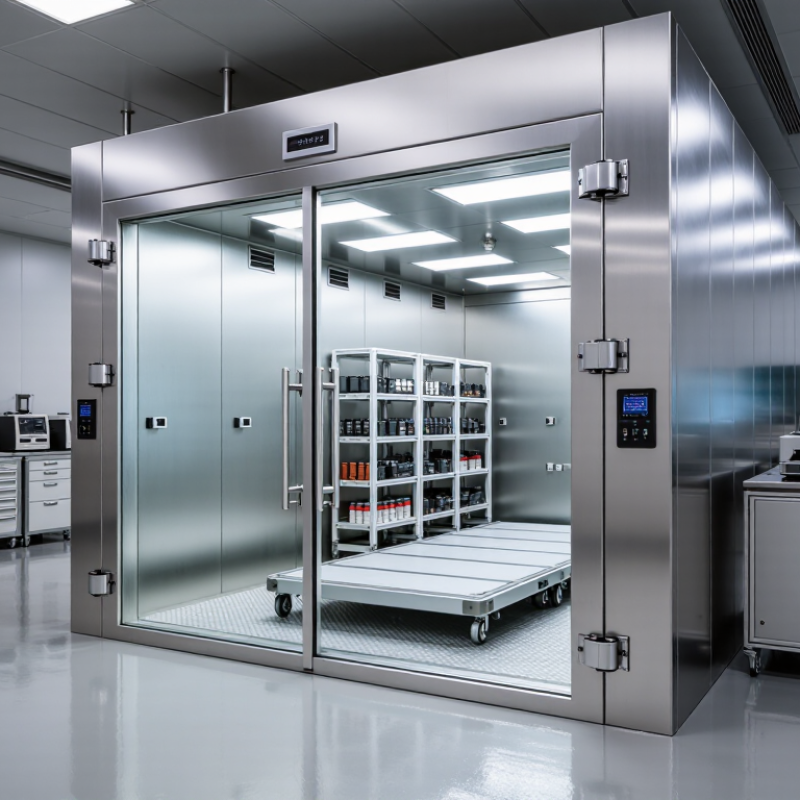
China Top Walk In Humidity Chamber Manufacturers?

What Is a Walk-In Humidity Chamber?

A walk-in humidity chamber is a large, enclosed test room that controls temperature and relative humidity. Technicians use it to evaluate products, materials, packaging, and electronic assemblies. Unlike a cabinet chamber, it allows people and full-sized equipment to enter. The chamber may reproduce damp storage, heat, condensation, or repeated climate changes. Test conditions often range from moderate humidity to near saturation, depending on the application.

A reliable chamber needs more than a powerful humidifier. Insulated wall panels, sealed doors, drainage, air circulation, and corrosion-resistant interior surfaces affect performance. Sensors should measure conditions near the test samples, not only beside the air inlet. A calibrated humidity sensor is essential. Small measurement errors can change the test result. That detail is easy to overlook.

When assessing manufacturers in China, buyers should request uniformity data, control accuracy, calibration records, and factory acceptance procedures. Ask how the system handles condensation after a high-humidity cycle. Review service response, spare-part availability, and installation requirements before purchase. In my experience, a well-written specification prevents many disputes. Yet specifications do not guarantee practical stability. The chamber should be tested with a loaded workspace, because empty-room performance can be misleading. Real equipment also needs careful airflow planning. Otherwise, one corner may remain wetter than the other. That is a problem worth checking early.


Walk-in humidity chambers are commonly used to maintain controlled relative-humidity conditions for environmental, reliability, and accelerated-aging tests. The representative setpoints shown above range from 30% RH to 95% RH, while the actual operating range depends on chamber design, temperature, and the applicable test standard.

How Do Walk-In Humidity Chambers Work?

Walk-in humidity chambers are large controlled rooms used to test products under stable temperature and moisture conditions. They help engineers observe swelling, corrosion, mold growth, insulation changes, and electronic failures. A sealed enclosure contains sensors, heaters, cooling coils, water tanks, and humidity control equipment. The control system continuously compares measured conditions with the programmed values.

Moisture usually enters the chamber as fine vapor. A steam generator adds humidity, while cooling coils remove it through condensation. Air circulation fans spread moisture evenly around test samples. The controller adjusts these systems several times per minute. Small leaks can disturb the test. Door seals matter more than many new users expect. Test shelves should not block airflow, either. I have found that uneven loading can create warmer, drier corners.

Tips: Calibrate temperature and humidity sensors regularly. Leave space between samples. Record door openings and recovery time. Inspect drains, seals, and water quality before long tests. A clean chamber gives more trustworthy results. Still, perfect uniformity is difficult. Product shape, packaging, and heat generation can change local conditions. Experienced technicians often place extra sensors near suspected hot or dry spots. This practical check may reveal errors that the main controller cannot show. Different manufacturers may use different airflow designs, so test reports should describe sensor locations, ramp rates, and actual recovery performance.

Key Features of Leading Chinese Manufacturers

China Top Walk In Humidity Chamber Manufacturers

Leading Chinese manufacturers focus on stable testing, practical design, and clear technical documentation. Their walk-in humidity chambers often use insulated panels, sealed doors, and corrosion-resistant interiors. These details help maintain uniform temperature and humidity across large test spaces. A reliable chamber should recover quickly after door opening. Ask for recovery data, not only attractive specifications.

Modern control systems provide touchscreen operation, programmable test cycles, alarm records, and remote data access. Skilled manufacturers also calibrate temperature and humidity sensors before delivery. Some provide mapping reports from several points inside the chamber. This matters when products occupy shelves or testing fixtures. Safety features may include door release systems, over-temperature protection, water-level alarms, and automatic shutdown functions.

Customization is another important feature. Chinese engineering teams may adjust chamber size, cable ports, flooring, lighting, and refrigeration capacity. Experienced buyers should inspect factory workmanship, welding quality, gasket compression, and drainage design. Factory visits or live video inspections can reveal details that brochures miss. No supplier gets every detail right. That is worth admitting. Ask how defects are handled, how spare parts are stocked, and how technicians respond after installation. Clear manuals, training records, and documented calibration support a more dependable purchase.

How to Compare China’s Top Chamber Suppliers

China’s Top Walk-In Humidity Chamber Manufacturers: How to Compare China’s Top Chamber Suppliers

Comparing suppliers requires more than checking chamber size and quoted price. Review temperature and humidity ranges, stability, uniformity, and recovery time after door opening. Ask for test data from a chamber with similar dimensions. A reliable supplier should explain sensor locations, calibration methods, control accuracy, and electrical requirements clearly. Request drawings before production. Check insulation thickness, stainless-steel surfaces, drainage design, lighting, and door sealing. These details affect daily testing, cleaning, and energy use.

Practical experience also matters. Ask whether the supplier has built chambers for your product type and operating schedule. Review factory quality procedures, inspection records, installation plans, and technical training. Independent calibration certificates add confidence, but verify their dates and traceability. Examine warranty coverage, spare-part availability, remote support, and response times. A polished brochure can still hide weak after-sales service. I would not ignore that risk.

Tips: Compare at least three written quotations using the same specifications. Ask for customer references and a factory video or audit. Confirm acceptance testing before shipment, including empty-chamber uniformity and humidity recovery. Check water quality requirements and condensation control. An inexpensive chamber may become costly when seals, sensors, or software need frequent replacement. Leave room for doubt, and record every promised feature in the contract.

What Industries Use Walk-In Humidity Chambers?

Walk-in humidity chambers serve industries where moisture can quietly damage safety, performance, or shelf life. Automotive manufacturers use them to test batteries, sensors, seals, dashboards, and charging components. The International Energy Agency reported nearly 14 million electric cars sold worldwide in 2023. That growth increases demand for controlled battery testing under heat and humidity.

Electronics producers expose circuit boards, connectors, and semiconductor packages to condensation and prolonged dampness. The World Semiconductor Trade Statistics organization valued global semiconductor sales at about 526.8 billion dollars in 2023. Humidity testing helps reveal corrosion, insulation failure, and unstable electrical connections. Testing often follows IEC 60068 environmental methods, although chamber settings must match the product’s real service conditions.

Pharmaceutical and medical-device facilities use walk-in chambers for stability studies, packaging checks, and controlled storage simulations. Food processors also examine packaging, texture, and microbial-risk conditions during shelf-life research. The Food and Agriculture Organization has reported that roughly 14 percent of food is lost between harvest and retail. Better package testing may reduce part of that waste. Still, a chamber is not a perfect replica of every warehouse or climate. Airflow, loading density, and door openings can change results. That assumption deserves checking. Reliable users document calibration, sensor placement, recovery time, and test deviations before trusting the data.

China Top Walk-In Humidity Chamber Manufacturers? - What Industries Use Walk-In Humidity Chambers?
Industry Typical Walk-In Chamber Application Common Test Conditions Products or Materials Evaluated Relevant Standards or Guidelines Key Chamber Considerations
Automotive and Transportation Environmental durability, corrosion, moisture ingress, condensation, and temperature-humidity cycling tests. Approximately 20–85°C, depending on the test method. Electronic control units, sensors, lighting assemblies, connectors, interior materials, seals, and vehicle components. IEC 60068-2-30; IEC 60068-2-78; ISO 16750-4; manufacturer-specific qualification procedures. Uniform airflow, programmable cycling, corrosion-resistant interiors, cable access, and sufficient floor loading for large components.
Electronics and Electrical Equipment Damp-heat endurance, insulation verification, condensation resistance, reliability screening, and accelerated aging. Commonly 23–85°C with controlled relative humidity from approximately 30–98% RH. Printed circuit boards, power supplies, displays, semiconductors, appliances, communication equipment, and control panels. IEC 60068-2-78 for steady damp heat; IEC 60068-2-30 for cyclic damp heat; applicable product safety standards. Precise humidity control, low-condensation operation, electrical safety protection, data logging, and test access for energized samples.
Battery and Energy Storage Humidity exposure, insulation durability, enclosure sealing, corrosion evaluation, and environmental reliability testing. Often approximately 20–60°C, with humidity selected according to the product qualification plan. Lithium-ion cells, battery modules, battery packs, energy-storage cabinets, chargers, and power electronics. IEC 60068 environmental test methods; applicable battery, transport, automotive, and electrical safety requirements. Fire-risk assessment, gas detection, emergency shutdown, sample monitoring, reinforced flooring, and separation of electrical and humidity systems.
Pharmaceuticals and Biotechnology Long-term, intermediate, and accelerated stability studies for medicines and packaged products. Typical ICH conditions include 25°C/60% RH for long-term studies and 40°C/75% RH for accelerated studies, where applicable. Active ingredients, finished medicines, biologics, medical formulations, packaging systems, and laboratory samples. ICH Q1A(R2) stability guidance; applicable GMP and regulatory requirements. Validated temperature and humidity mapping, continuous monitoring, alarm management, access control, calibration, and backup power planning.
Medical Devices Shelf-life validation, packaging durability, material aging, moisture sensitivity, and environmental conditioning. Commonly 20–60°C with controlled humidity selected for the device and packaging study. Implants, diagnostic equipment, tubing, polymer components, sterile barrier systems, and electronic medical devices. IEC 60068-2-78; ISO 11607 for sterile barrier packaging; applicable device quality-system requirements. Cleanable surfaces, traceable records, stable uniformity, sample loading controls, and compatibility with sterile packaging studies.
Plastics, Rubber, and Composites Moisture absorption, swelling, dimensional stability, mechanical property retention, and aging evaluation. Often 23–85°C with humidity ranging from ambient conditioning to high-RH exposure. Plastic housings, elastomer seals, composite panels, molded parts, adhesives, coatings, and laminates. ASTM D618 for conditioning plastics; ISO 291 for standard atmospheres; material-specific test methods. Adequate sample spacing, air circulation around specimens, condensation control, and corrosion-resistant racks.
Textiles, Leather, and Apparel Standard conditioning before testing tensile strength, dimensional change, colorfastness, and moisture-related performance. A common textile conditioning atmosphere is 20°C and 65% RH, subject to regional and product requirements. Yarns, fabrics, garments, leather, coated textiles, technical fibers, and nonwoven materials. ISO 139; ASTM D1776; relevant textile and leather product test methods. Stable uniformity, gentle airflow, sufficient hanging or shelving space, and prevention of direct condensation on specimens.
Packaging, Paper, and Printing Conditioning, moisture resistance, dimensional stability, compression performance, and package material comparison. Frequently conditioned near 23°C and 50% RH, with other conditions used for specific studies. Corrugated board, cartons, labels, films, paper, flexible packaging, pallets, and shipping containers. ASTM D4332; ASTM D618; ISO 187; ASTM D4169 for distribution-performance testing. Large internal volume, uniform air distribution, adjustable shelving, forklift access, and accurate control at moderate humidity levels.
Food and Beverage Packaging Package material conditioning, seal performance, barrier evaluation, label adhesion, and moisture-related storage studies. Typical studies may use ambient to elevated temperatures with controlled RH selected for the package and product. Plastic containers, pouches, cans, closures, labels, laminates, and barrier films. ASTM D4332; ASTM F88/F88M for seal strength; product-specific packaging and shelf-life protocols. Hygienic construction, easy cleaning, non-shedding interior surfaces, odor control, and separation from direct food-contact contamination risks.
Building Materials and Construction Products Moisture conditioning, dimensional change, coating durability, mold-risk studies, and material performance assessment. Commonly 20–40°C with moderate to high relative humidity. Insulation, flooring, sealants, coatings, wall panels, wood products, gypsum materials, and construction adhesives. ASTM C177; ASTM C518; ASTM D2247; ISO and EN methods applicable to the specific material. High load capacity, large sample clearance, moisture-resistant construction, air circulation, and provision for bulky specimens.
Aerospace and Defense Environmental qualification, moisture exposure, corrosion resistance, functional testing, and long-duration reliability studies. May range from low-temperature conditions to elevated temperatures with controlled humidity cycles. Avionics, wiring, structural materials, sensors, communication equipment, coatings, and aircraft components. MIL-STD-810 environmental engineering methods; IEC 60068 methods; project-specific aerospace specifications. Large test volume, high reliability, programmable profiles, secure data acquisition, safety interlocks, and customized access ports.
Solar, LED, and Renewable-Energy Equipment Moisture penetration, insulation degradation, corrosion, power-output stability, and outdoor durability evaluation. Often approximately 20–85°C with high-humidity exposure or cyclic damp-heat conditions. Photovoltaic modules, LED luminaires, inverters, junction boxes, connectors, charge controllers, and outdoor enclosures. IEC 60068-2-78; IEC 60068-2-30; applicable photovoltaic, lighting, and electrical equipment standards. Large clear working space, high humidity stability, electrical isolation, sample energization capability, and corrosion-resistant construction.
Note: The conditions shown are representative industry practices rather than universal specifications. Final chamber requirements should be confirmed against the applicable product standard, sample size, test duration, safety assessment, and validation protocol.
en_USEnglish

PCD Inserts

PCBN Inserts

Solid CBN Inserts

PCD Milling Cutter

PCD Drilling Tools

PCD Reamer

Diamond Special Tool

Diamond Dressers